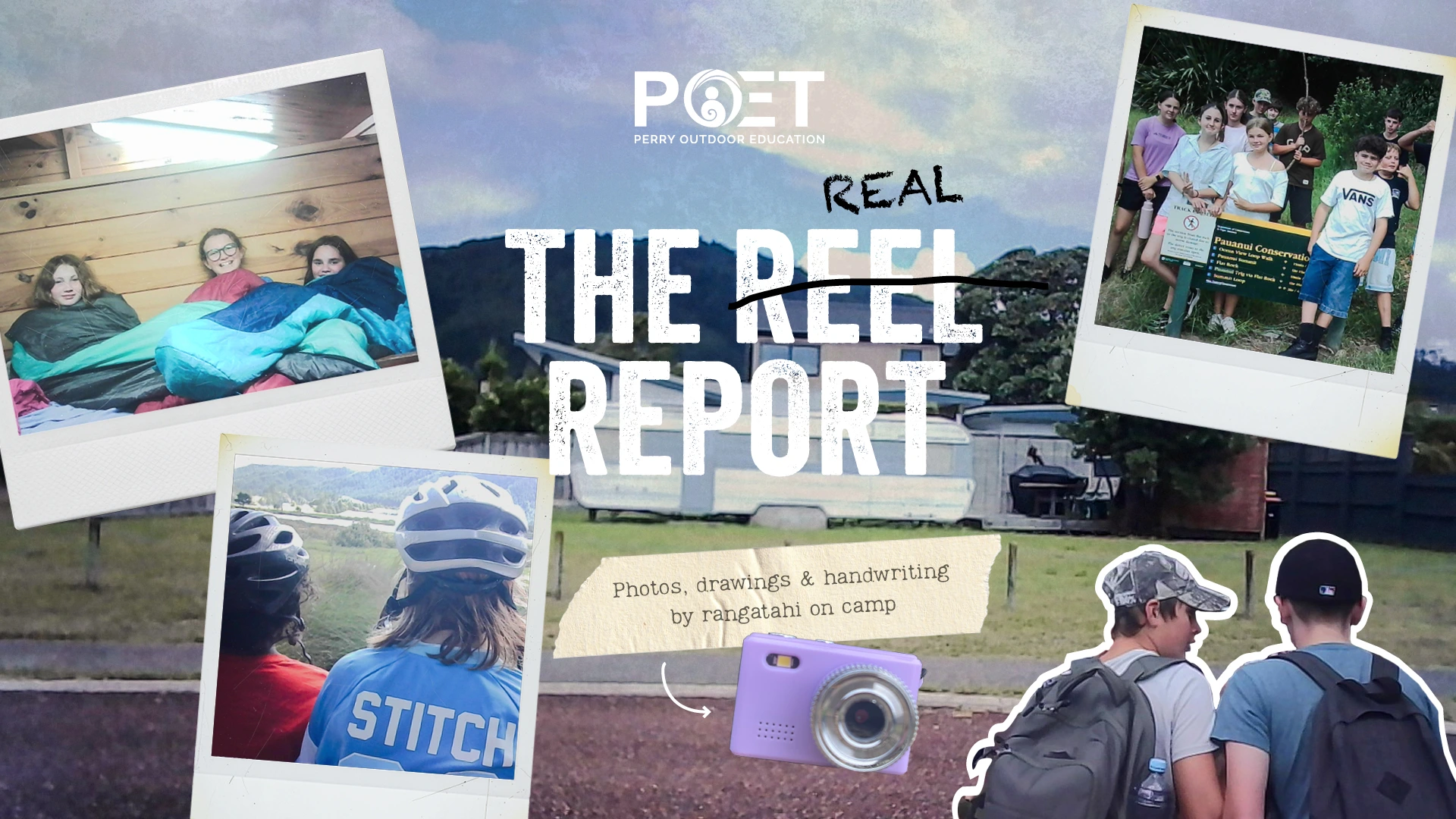


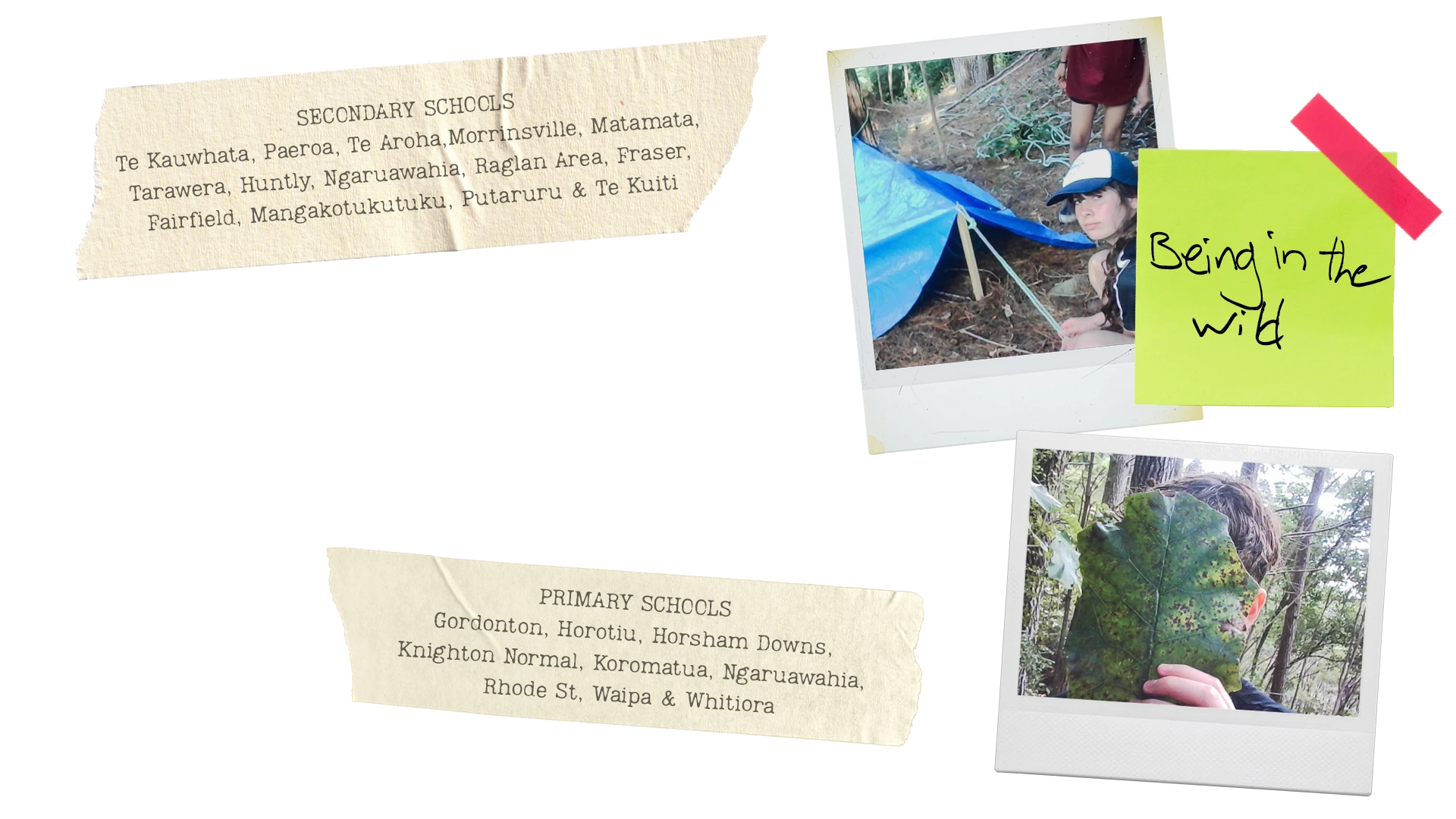
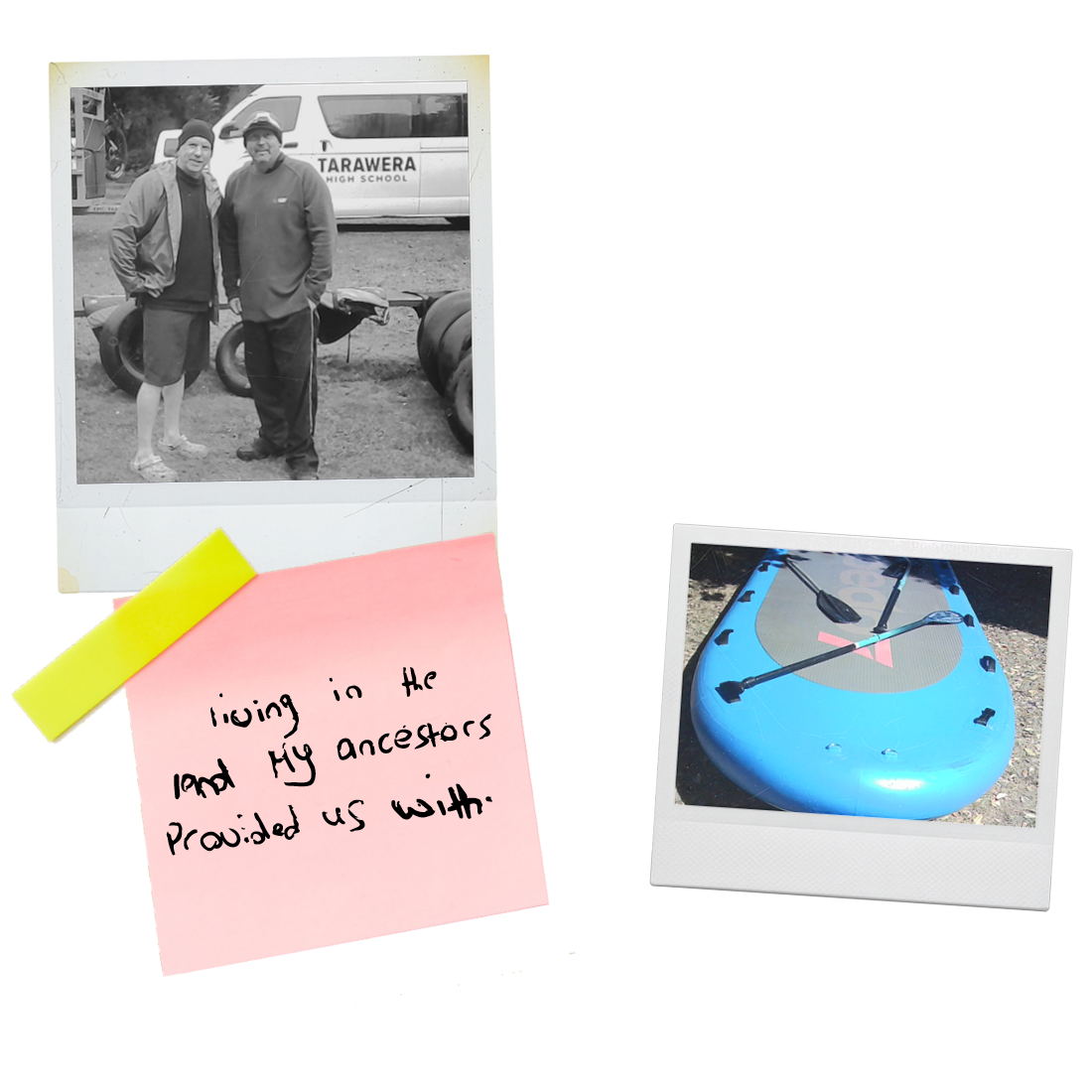
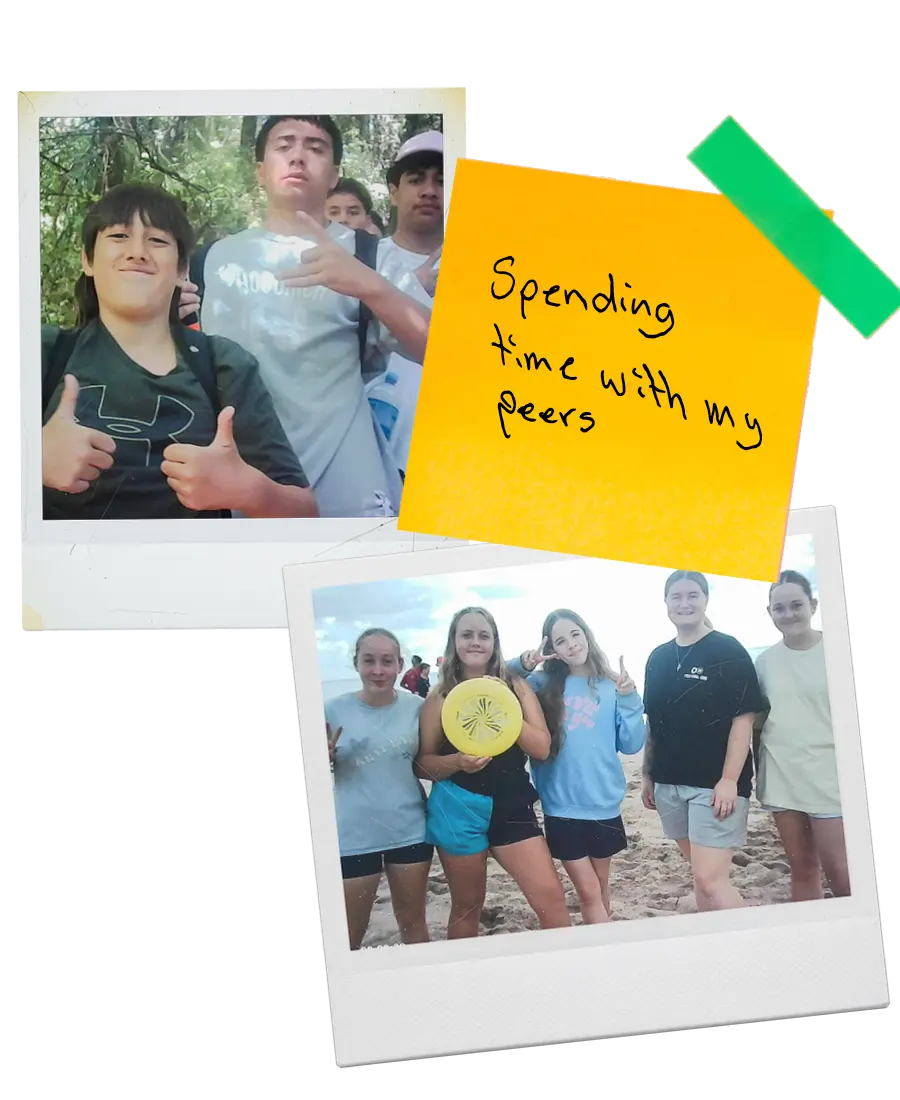
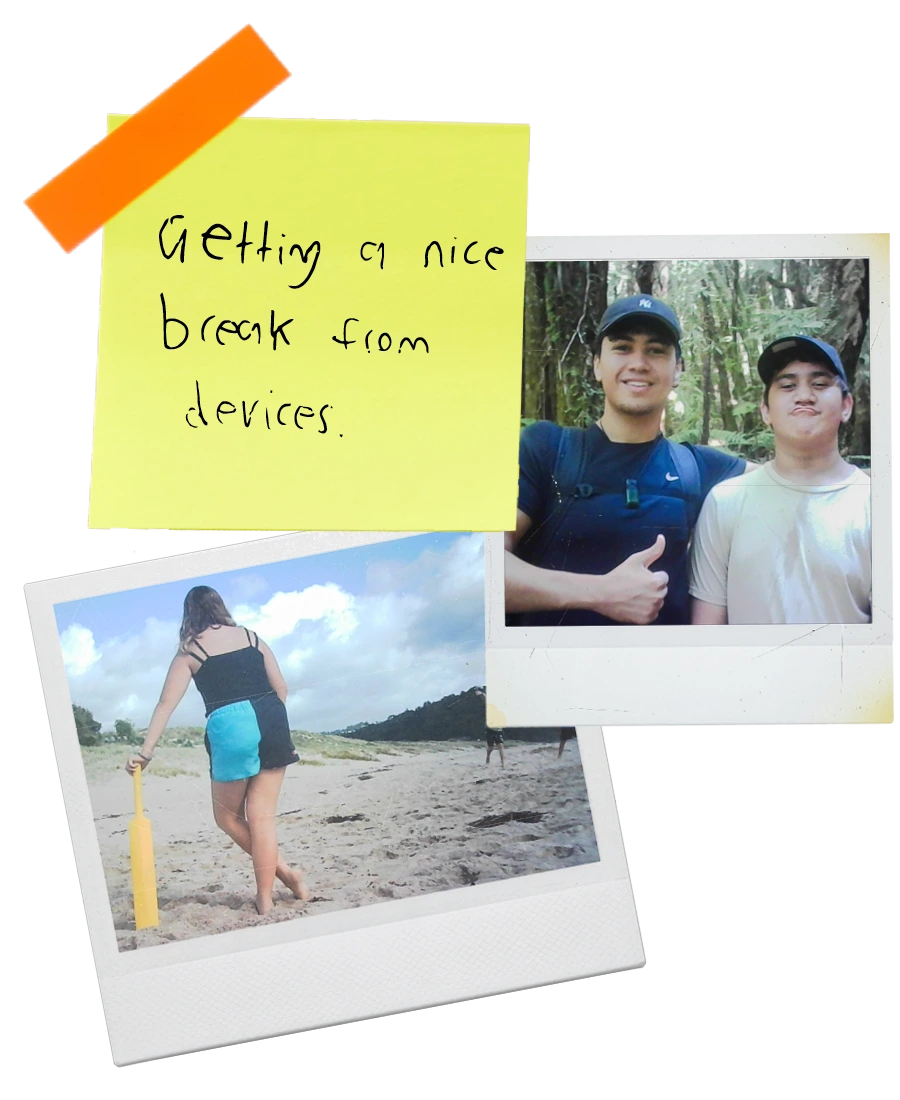
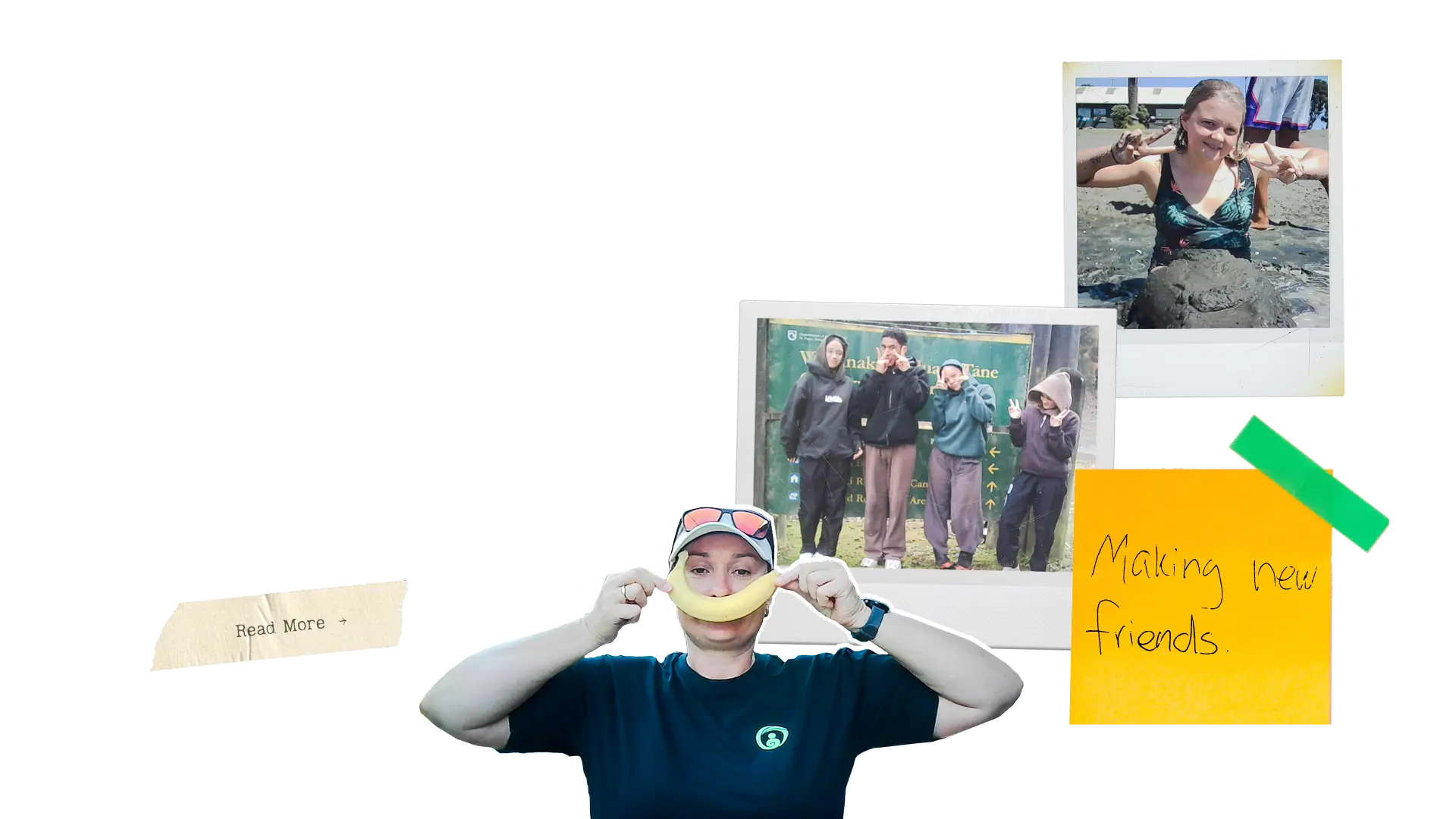
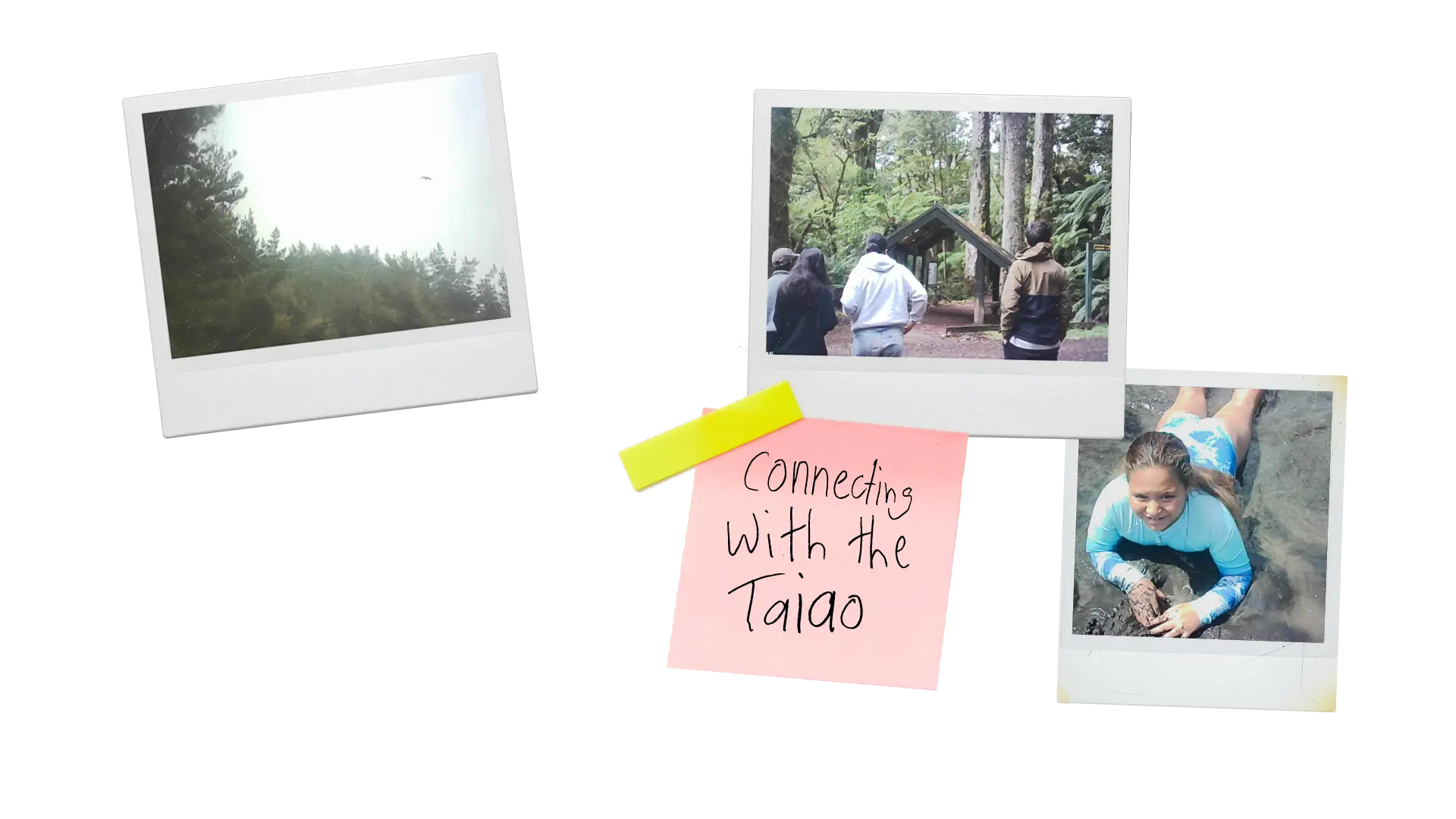
The images throughout these pages were taken by the young people we work alongside. They are not staged, filtered, professionally curated, or generated through technology. In most cases, students were simply handed a camera or device with very little direction or instruction and invited to capture what mattered to them. What you see in these pages is what they chose to notice, remember, and share.
We chose to present the report this way intentionally. In a world increasingly shaped by AI, algorithms, screens, prompts, and carefully curated online lives, authentic connection matters more than ever. Outdoor learning offers something real, muddy sneakers, tired legs, cold mornings, shared laughter, challenge, silence, conversation, confidence, and connection to the natural world that cannot be replicated through a device.
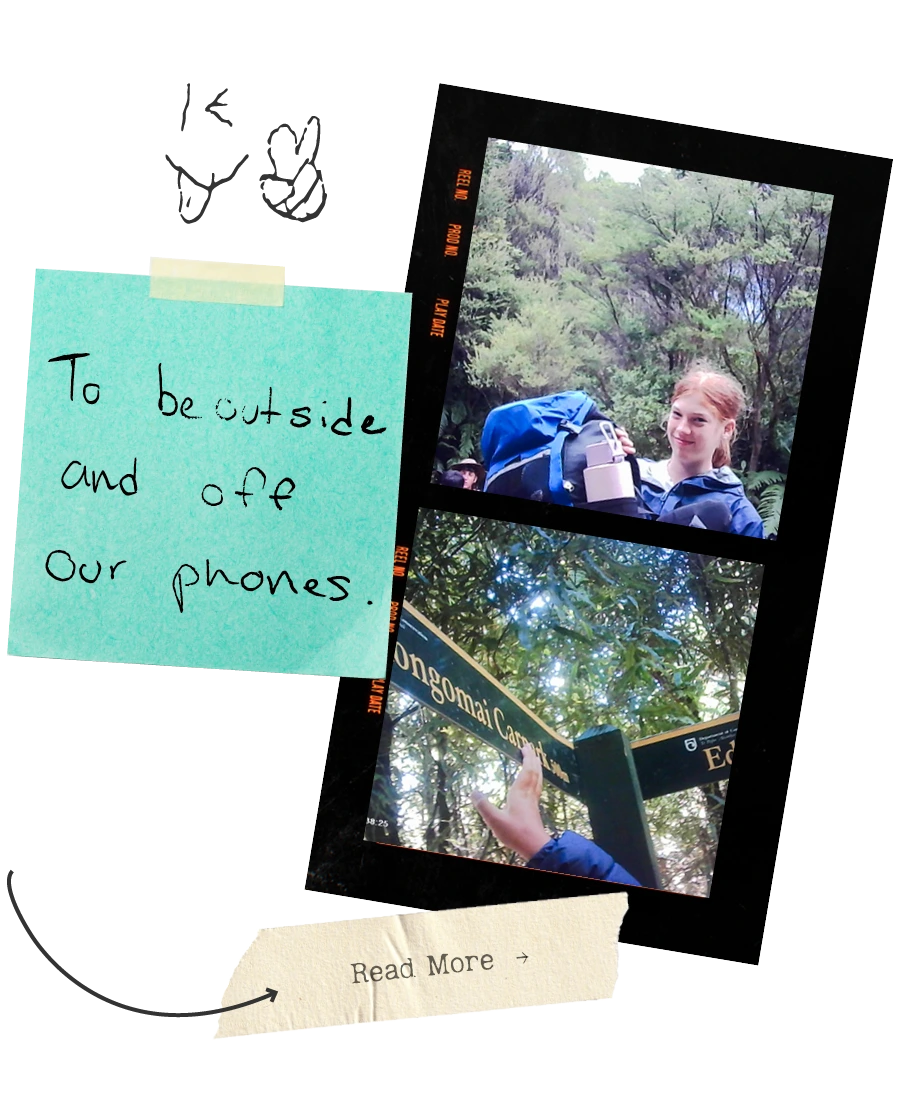
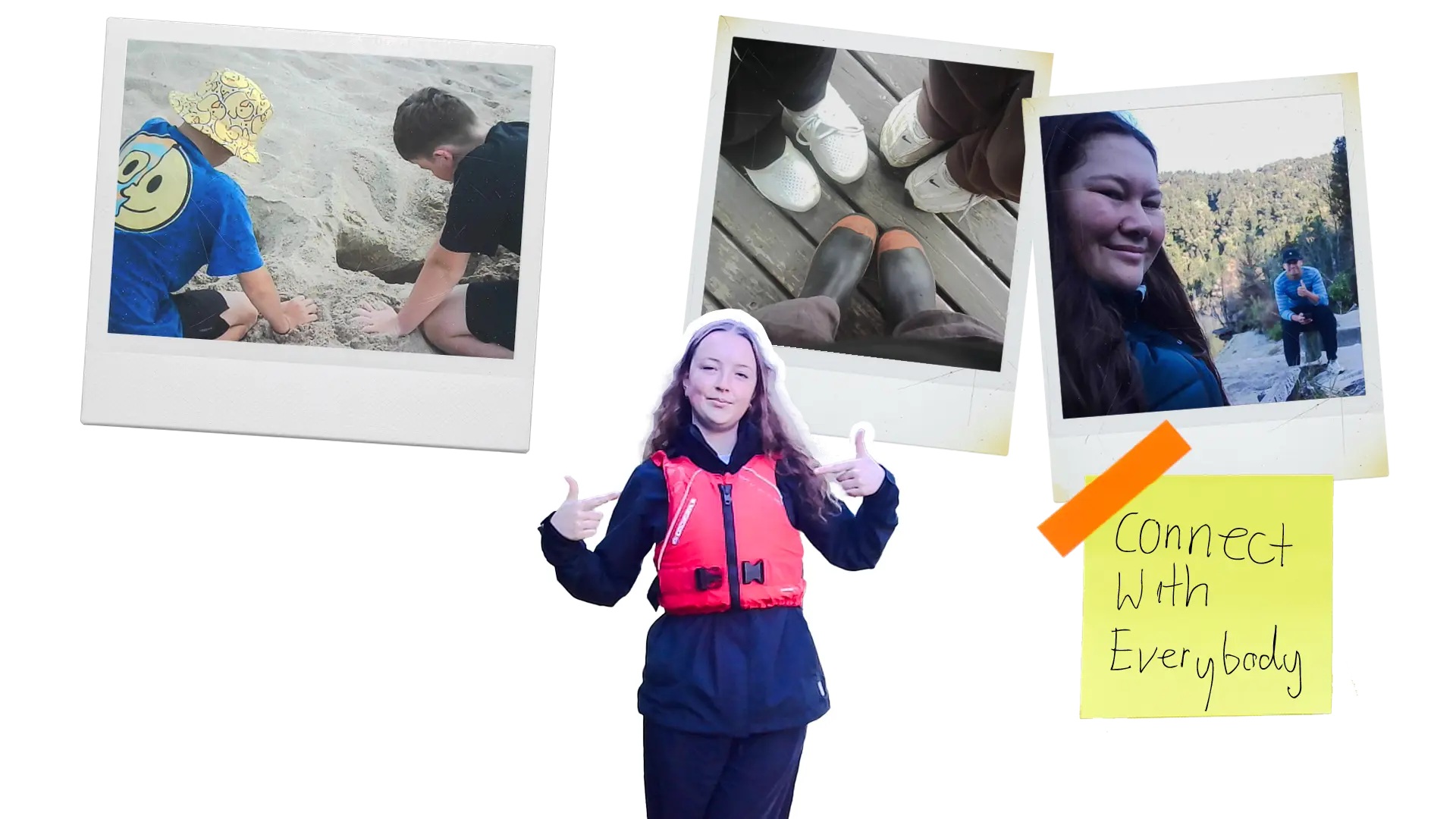


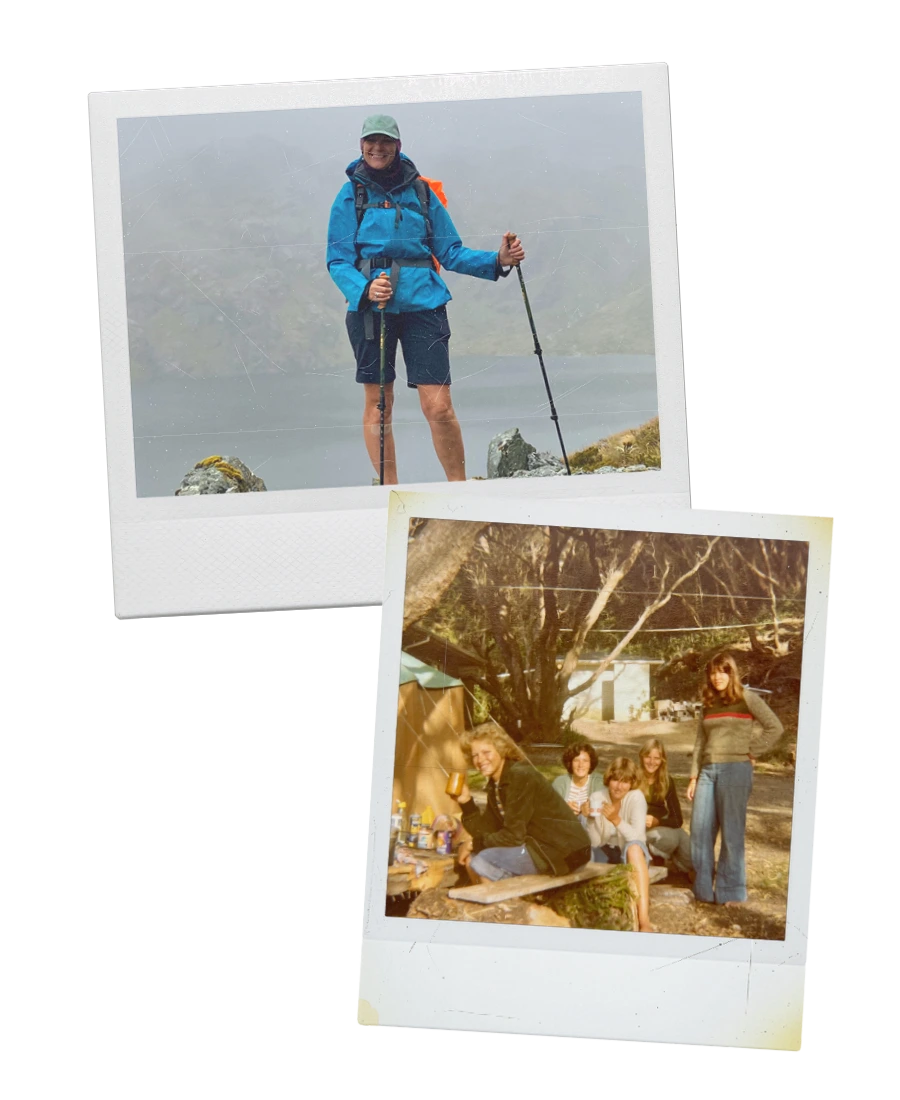
Having just returned from a sojourn down south biking and hiking in the amazing Otago and Southland landscapes, I have experienced for myself the rejuvenating and uplifting effect of getting out and active in nature. It highlighted for me the growing importance of outdoor learning as a counterbalance to the pressures facing young people today.
Internationally and here in Aotearoa, there is increasing concern about the impact of screen time, disengagement, and declining wellbeing. What we are seeing through our work at POET is that time in the outdoors is not a “nice to have” — it is essential.


At POET, we choose to have our finances independently audited each year. It’s one of the ways we demonstrate our commitment to transparency and give our supporters confidence that the funds entrusted to us are being managed carefully and responsibly.
Like many organisations across the sector, 2025 was a challenging financial year. Rising costs, ongoing pressure on funding, and a changing environment meant we finished the year with a deficit. While that is never our goal, we were fortunate to have built prudent reserves over time that allowed us to absorb this pressure without compromising what matters most, delivering meaningful outdoor learning experiences for rangatahi and tamariki.

POET Friends is our new giving programme for people who believe outdoor learning matters. It is a way for individuals, families, businesses, and supporters to help create meaningful outdoor experiences for rangatahi and tamariki across the Waikato and Bay of Plenty.
Every contribution helps support real experiences,real connection, and real opportunities for young people to step outside, challenge themselves, and connect with the world around them.

I remember taking a group of high school students who were failing in the classroom for a tramp up the foothills of Mt Ruapehu. We learnt maths on the mountain by solving real navigation problems on the tramp.
Near the end of our tramp, we stopped at a lookout. Without any prompting a student blurted out “I can think clearly out here”. Highlighting the difference between learning inside and outside. Learning in the outdoors is returning to the mode of learning our brains have evolved to learn in.

Our governance team is a vital part of POET; their support and guidance give our staff confidence and help keep us focused on what matters —creating meaningful outdoor learning experiences for young people across the region, and helping us keep turning learning inside out.


Our governance team is a vital part of POET, and we’re grateful to have such a dedicated group.
Their support and guidance give our staff confidence and help keep us focused on what matters —creating meaningful outdoor learning experiences for young people across the region, and helping us keep turning learning inside out.

Sometimes there can be a perception that getting young people engaged in something new is difficult, especially when it competes with phones, screens, and the comfort of staying within familiar spaces. But this project was a good reminder not to make assumptions. Armed with five tiny $35 cameras from Kmart, students headed out on camp to take part in “colour hunting.”
Each individual or group was assigned a colour red, blue, green, orange etc with the challenge of photographing anything connected to that colour during the day. Beyond that, there was very little instruction.
What followed was fascinating. Students began noticing details that both they and the adults around them would normally walk straight past. Plants beside the track, patterns in leaves, reflections in water, faded paint, equipment, clothing, and small flashes of colour hidden throughout the environment.

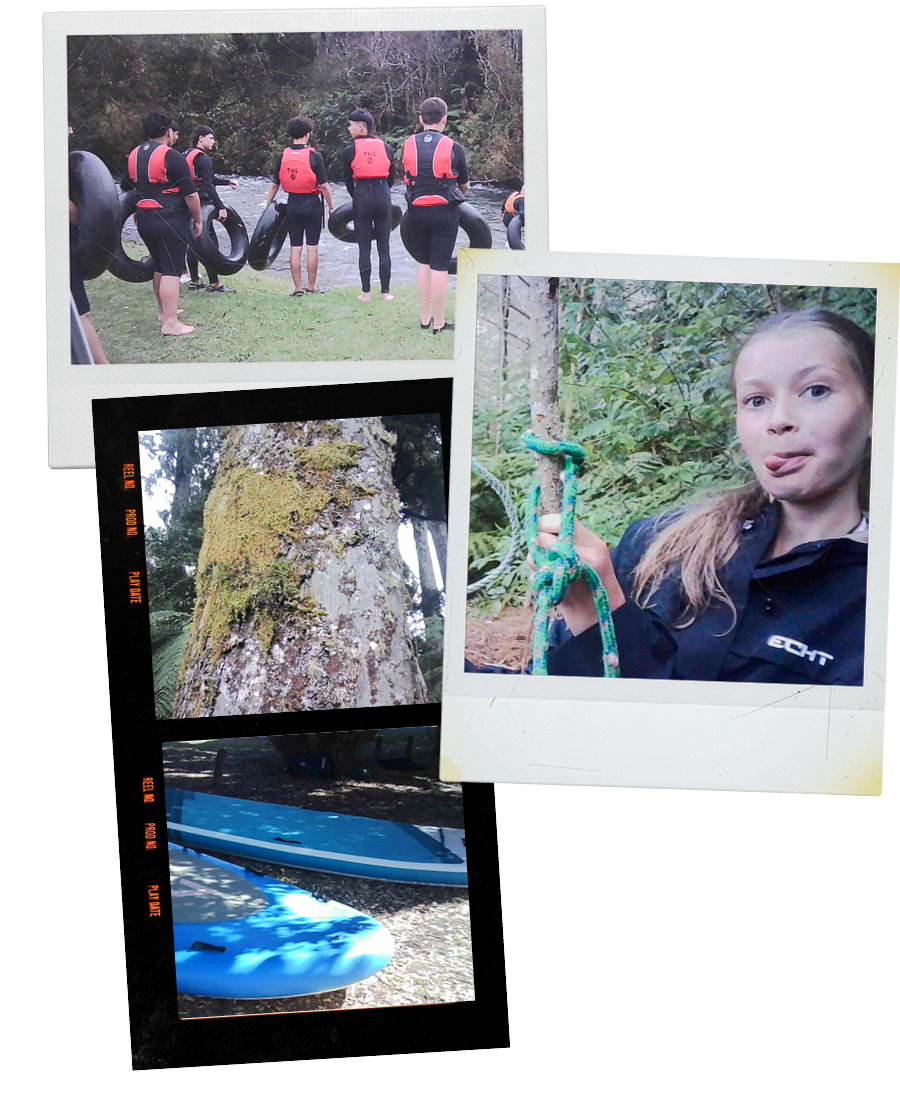
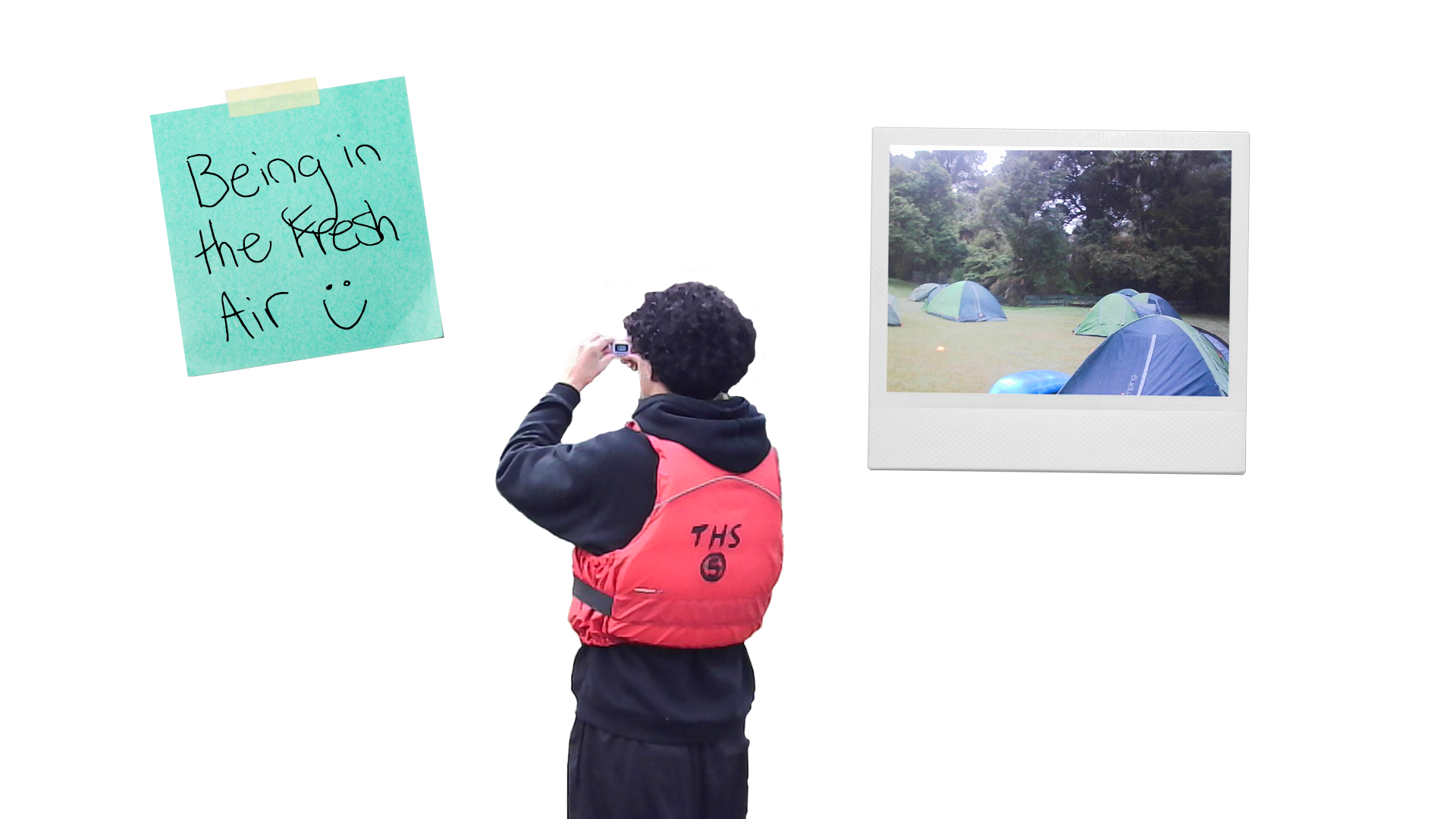














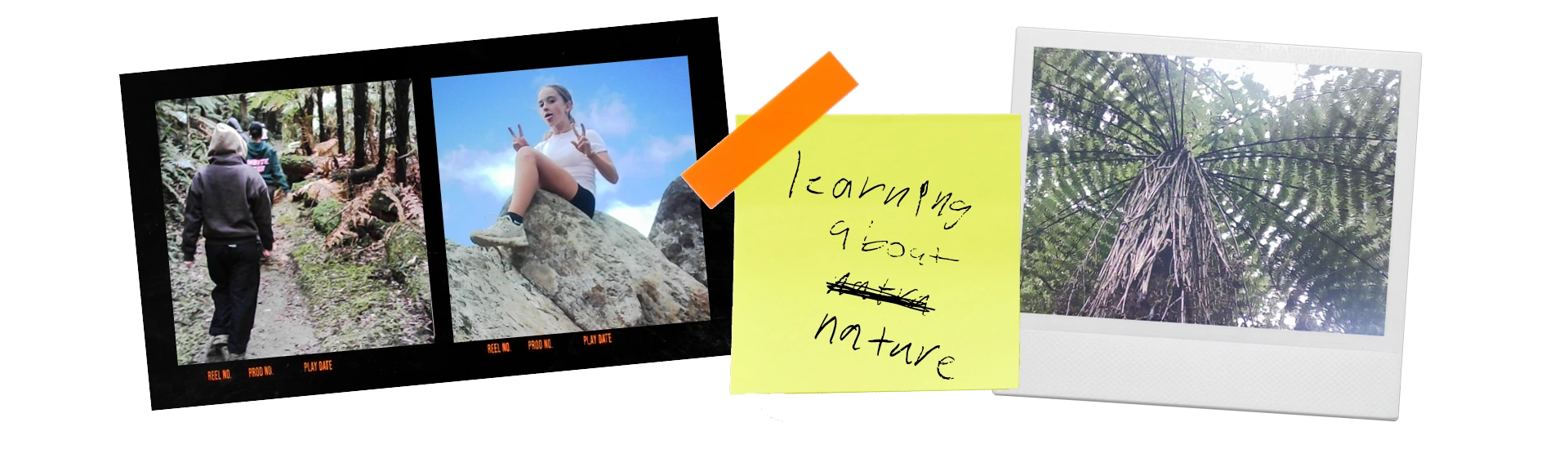
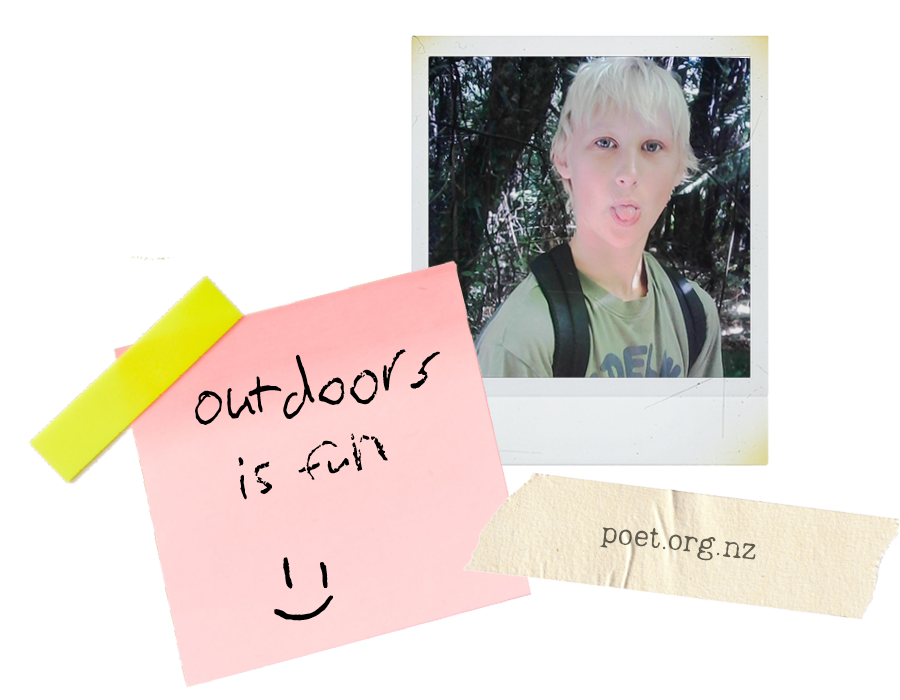


The images throughout these pages were taken by the young people we work alongside. They are not staged, filtered, professionally curated, or generated through technology. In most cases, students were simply handed a camera or device with very little direction or instruction and invited to capture what mattered to them. What you see in these pages is what they chose to notice, remember, and share.
We chose to present the report this way intentionally. In a world increasingly shaped by AI, algorithms, screens, prompts, and carefully curated online lives, authentic connection matters more than ever. Outdoor learning offers something real, muddy sneakers, tired legs, cold mornings, shared laughter, challenge, silence, conversation, confidence, and connection to the natural world that cannot be replicated through a device.
The photos and words shared here reflect that reality far better than polished marketing images ever could. They show outdoor education as it truly is: messy, fun, challenging, uncomfortable, exciting, and deeply human.
This is the story of 2025 as it was experienced by the rangatahi and tamariki who walked the tracks, paddled the lakes, sat around campfires, pushed through challenges, supported one another, and discovered something about themselves along the way.


Having just returned from a sojourn down south biking and hiking in the amazing Otago and Southland landscapes, I have experienced for myself the rejuvenating and uplifting effect of getting out and active in nature. It highlighted for me the growing importance of outdoor learning as a counterbalance to the pressures facing young people today.
Internationally and here in Aotearoa, there is increasing concern about the impact of screen time, disengagement, and declining wellbeing. What we are seeing through our work at POET is that time in the outdoors is not a “nice to have” — it is essential. Our programmes are creating space for rangatahi and tamariki to reconnect with themselves, with others, and with nature, and that is showing up in their confidence, resilience, and sense of belonging.
At the same time, the education environment has continued to shift. Changes in government priorities and increasing pressure on schools to focus on core curriculum areas like literacy and numeracy are influencing how schools make decisions about their time and resources. Despite this, we have maintained strong engagement with our partner schools, which speaks to the value they place on what we offer. The evidence of this in the numbers- we continue to grow our days in the outdoors in all areas. We continue to be adaptable, to clearly articulate our relevance, and to position outdoor learning as something that strengthens — rather than competes with — classroom learning.
We are all about equity of access at POET. The cost of delivering programmes, particularly transport, continues to rise, and this remains one of the biggest barriers for schools and whānau. We have worked hard to absorb these pressures and secure funding support so that cost does not become a reason for students to miss out. This commitment to equity sits at the heart of who we are and has guided many of our decisions throughout the year. Funding remains tight in the current economy.
Finally, 2025 has reinforced the importance of being forward-looking. The environment we operate in is changing — financially, politically, and socially. Through this,we have remained focused on sustainability, on telling our story more effectively, and on ensuring we are ready to respond to both challenges and opportunities ahead.
Our dedicated staff and Board remain committed and united in achieving these goals, and I thank them for their continued hard work and generosity.
Marlene Julian
Chairperson POET

The rapid expansion of AI (Artificial Intelligence) in the classroom may be detrimental to our children’s education. Students are offloading their thinking onto AI models (Adarlo, 2026); “it’s easy, you don’t have to use your brain” was a common quote from students in Adarlo’s 2026 student interviews on learning with AI models. AI allows students to outsource their thinking, passively accepting the AI models, rendering them incapable of applying knowledge to any novel context “as they float on a sea of algorithmic slop, they neither have the wit nor the will to navigate” (James & Hendrick, 2025). Students today are the first generation to score lower on standardised academic tests than the generation before it (Fike, 2026).
Increased exposure to AI and social media technology is also considered detrimental to social connections. AI creates an illusion of connection, frictionless, always available, that doesn’t require negotiation, patience, or discomfort (Adarlo, 2026). Screen living leads to lack of confidence with unfamiliar situations, anxiety about doing things wrong, and dependence on apps (Cockroft, 2026).
Outdoor education by contrast builds confidence almost by accident, where navigating a track, lighting a fire responsibly, or reading water allows students to “work it out” themselves (Cockroft, 2026). Outdoor environments rewards patience, observation, and persistence; provides practice in judgement, responsibility, cooperation, and self-trust (Cockroft, 2026).
I remember taking a group of high school students who were failing in the classroom for a tramp up the foothills of Mt Ruapehu. We learnt maths on the mountain by solving real navigation problems on the tramp. Near the end of our tramp, we stopped at a lookout. Without any prompting a student blurted out “I can think clearly out here”. Highlighting the difference between learning inside and outside. Learning in the outdoors is returning to the mode of learning our brains have evolved to learn in.
“There is no WIFI in the forest but you will find a better connection” (author unknown)
References
Adarlo, S. (2026). AI in schools is undermining kids social and intellectual development. Futurism, Jan 17, 2026. Downloaded from www.http.futurisim.com/artifical-intellegence/ai-schools-kids-social-and-intellectual-development/
Cockroft, A. (2026). What the Outdoors teaches that screens never will. Council Outdoor Research Association of NZ Inc. Downloaded from www.coranz.org.nz/what-the -outdoors-teaches-kids-that-screens-never-will/
Fike, A. (2026). Gen Z is the first generation dumber than parents, neuroscientists claim
Downloaded from www.vice.com/en/article/gen-z-is-the-first-students-dumber-than-their-parents-neuroscientists-claim/
James, D., & Hendrick, C. (2025). AI will make our children stupid. Downloaded from www.the critic.co.uk/ai-will-make-our-children-stupid/

A group of Year 12 students from different Waikato schools stood together at the start of our inaugural Leadership Journey in 2025, many not knowing each other, some quietly nervous, and all unsure of what the next three days might bring. By the end of the experience they were paddling, riding, laughing, encouraging one another and stepping into leadership in ways that felt real and authentic. For us at POET, seeing young people from different schools connect so quickly through shared challenge, conversation and time outdoors was one of the highlights of the year. The multi-school approach was new for the students and new for us too, and it reminded us just how powerful outdoor learning can be in bringing people together.
That same spirit of connection sat behind an important shift for POET this year as we moved to a clearer six programme delivery model. Across the Waikato and parts of the Bay of Plenty, our Primary, Secondary, Teacher Support and PLD, Student Leadership, Kids Starter and Community Programmes now provide a more connected pathway for schools and communities to engage with outdoor learning. Rather than offering isolated experiences, we are building programmes that grow with young people over time and respond to the needs of schools, staff, whānau and local communities.
Across all six programme areas, the focus remains the same. We want young people to feel connected, capable and able to thrive, not just at school but in life. Throughout the year students explored local ngahere, paddled waka ama, rode bikes, cooked outdoors, challenged themselves on camp and spent time learning alongside each other away from the pressures and distractions of everyday life. Teachers also continued to grow their confidence and capability to lead meaningful outdoor learning experiences connected to local places and local stories.
Moving to a programme-based model is also helping us build stronger long-term partnerships with funders, sponsors and supporters. It creates clearer opportunities for organisations to connect with a specific area of work that aligns with their own values and priorities, while helping POET target support where it can make the biggest difference. As we look ahead, we remain focused on creating meaningful, accessible outdoor learning opportunities that strengthen wellbeing, resilience, leadership and connection for rangatahi and tamariki across our region.
One of the simplest ideas turned out to be one of the most memorable.
Sometimes there can be a perception that getting young people engaged in something new is difficult, especially when it competes with phones, screens, and the comfort of staying within familiar spaces. But this project was a good reminder not to make assumptions.
Armed with five tiny $35 cameras from Kmart, students headed out on camp to take part in “colour hunting.” Each individual or group was assigned a colour red, blue, green, orange etc with the challenge of photographing anything connected to that colour during the day. Beyond that, there was very little instruction.
What followed was fascinating. Students began noticing details that both they and the adults around them would normally walk straight past. Plants beside the track, patterns in leaves, reflections in water, faded paint, equipment, clothing, and small flashes of colour hidden throughout the environment.
The activity also became a surprisingly positive distraction during parts of camp such as tramping. Instead of focusing on how far was left to walk or how tired they were feeling, students became absorbed in spotting colours, textures, patterns, and interesting moments around them. It shifted attention outward and encouraged them to engage more deeply with the environment they were moving through.
Students worked in groups and sometimes individually, photographing whatever caught their attention, from moss on rocks, muddy boots, sunset reflections, tent zips, native plants, campfires, paddles, and the small details both students and adults would normally walk straight past.
The best part was that the students had complete agency. There was no “right” photo and no expectation around what they should capture. Some students were constantly snapping away, others quietly observed before taking the occasional photo, but almost everyone got involved at some point and the activity quickly became a fun and natural part of camp.
What started as a simple low-cost activity became something much bigger. The cameras created conversation, laughter, creativity, and genuine whakawhanaungatanga. Students gathered around comparing images, sharing perspectives, and seeing familiar places through completely different eyes.
In many ways, the project perfectly reflects the theme of this annual report. In a world full of curated content, filters, prompts, and polished online images, these photos are something different, real moments captured by young people connecting with people, place, and the outdoors in their own authentic way.
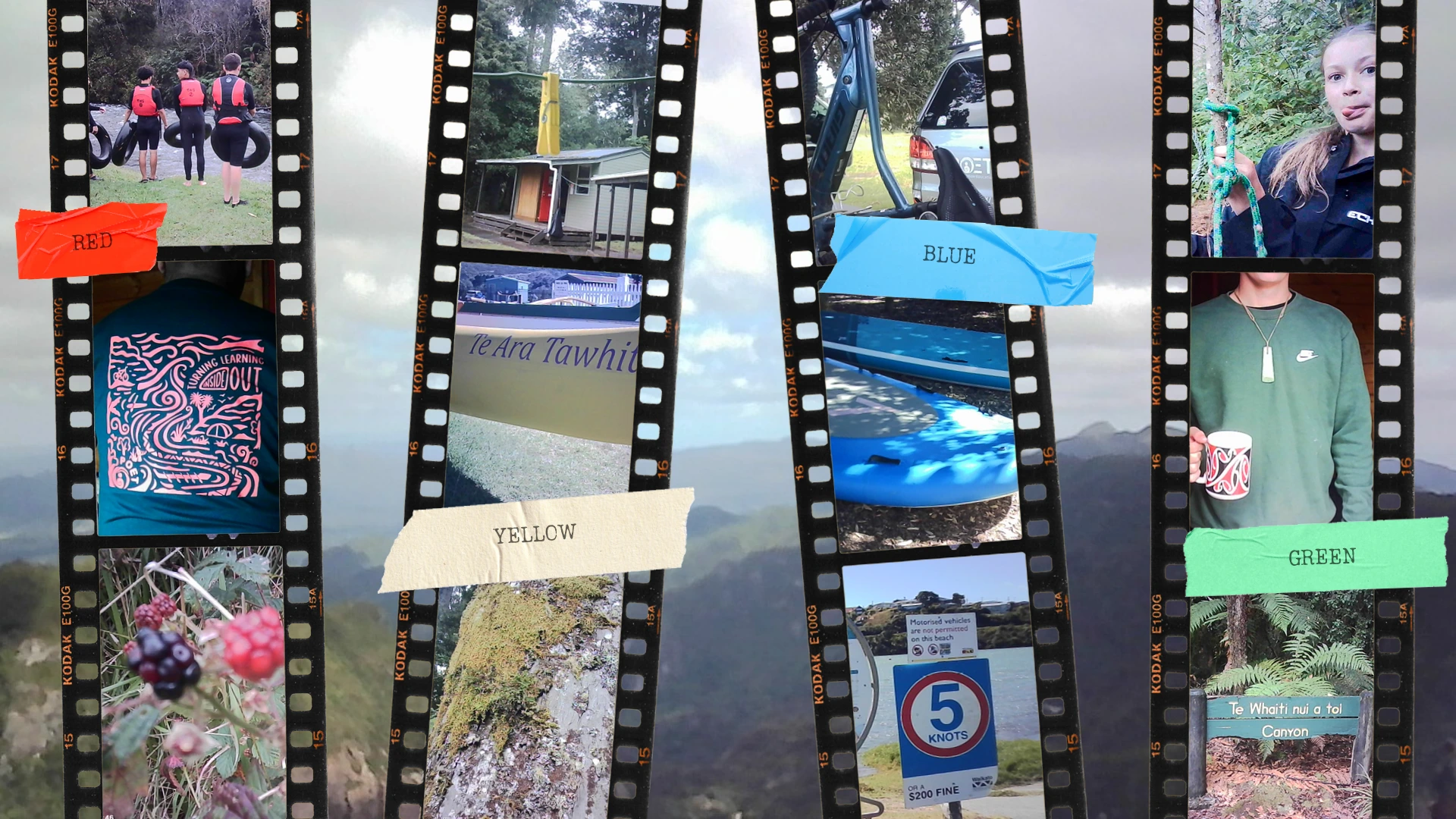
One of the simplest ideas turned out to be one of the most memorable.
Sometimes there can be a perception that getting young people engaged in something new is difficult, especially when it competes with phones, screens, and the comfort of staying within familiar spaces. But this project was a good reminder not to make assumptions.
Armed with five tiny $35 cameras from Kmart, students headed out on camp to take part in “colour hunting.” Each individual or group was assigned a colour red, blue, green, orange etc with the challenge of photographing anything connected to that colour during the day. Beyond that, there was very little instruction.
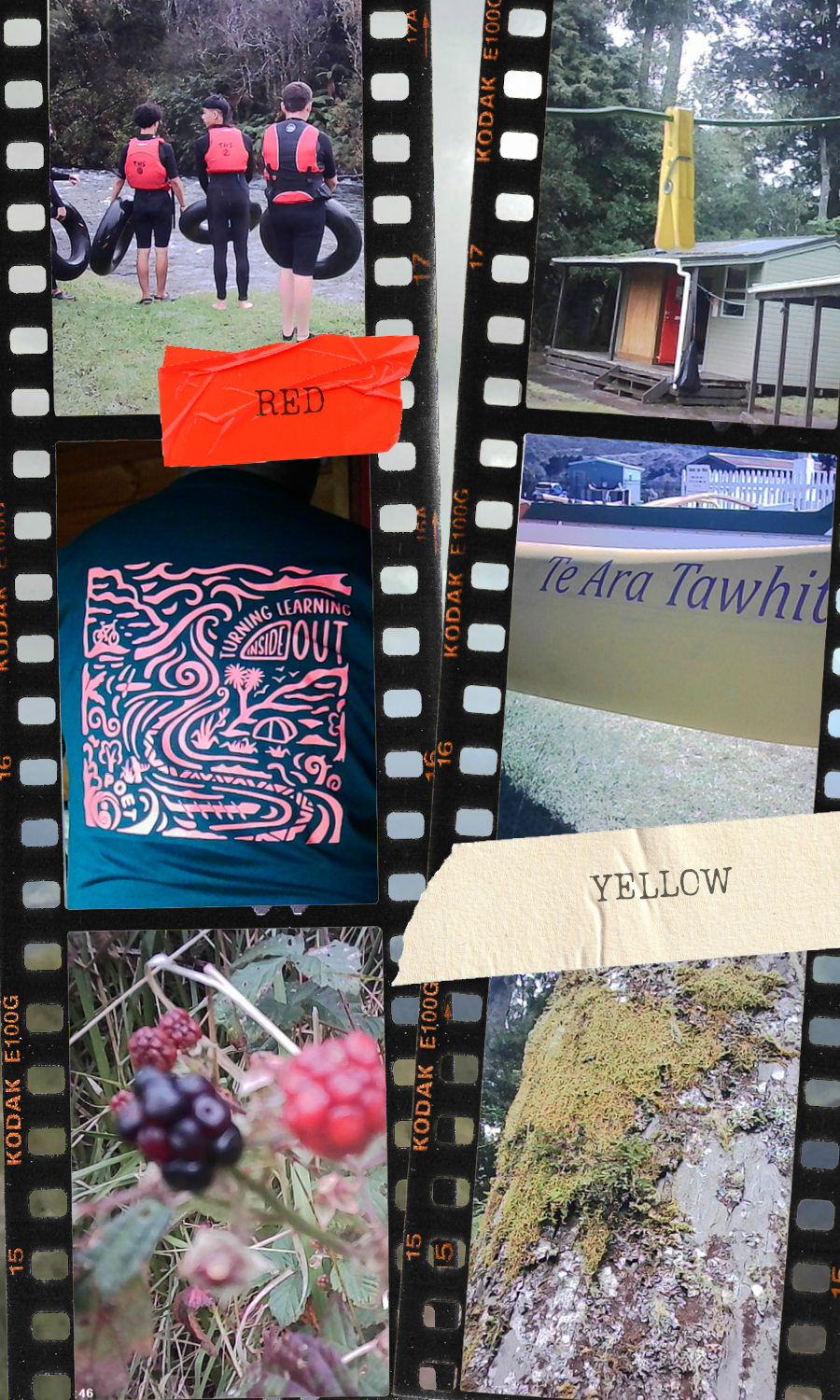
What followed was fascinating. Students began noticing details that both they and the adults around them would normally walk straight past. Plants beside the track, patterns in leaves, reflections in water, faded paint, equipment, clothing, and small flashes of colour hidden throughout the environment.
The activity also became a surprisingly positive distraction during parts of camp such as tramping. Instead of focusing on how far was left to walk or how tired they were feeling, students became absorbed in spotting colours, textures, patterns, and interesting moments around them. It shifted attention outward and encouraged them to engage more deeply with the environment they were moving through.
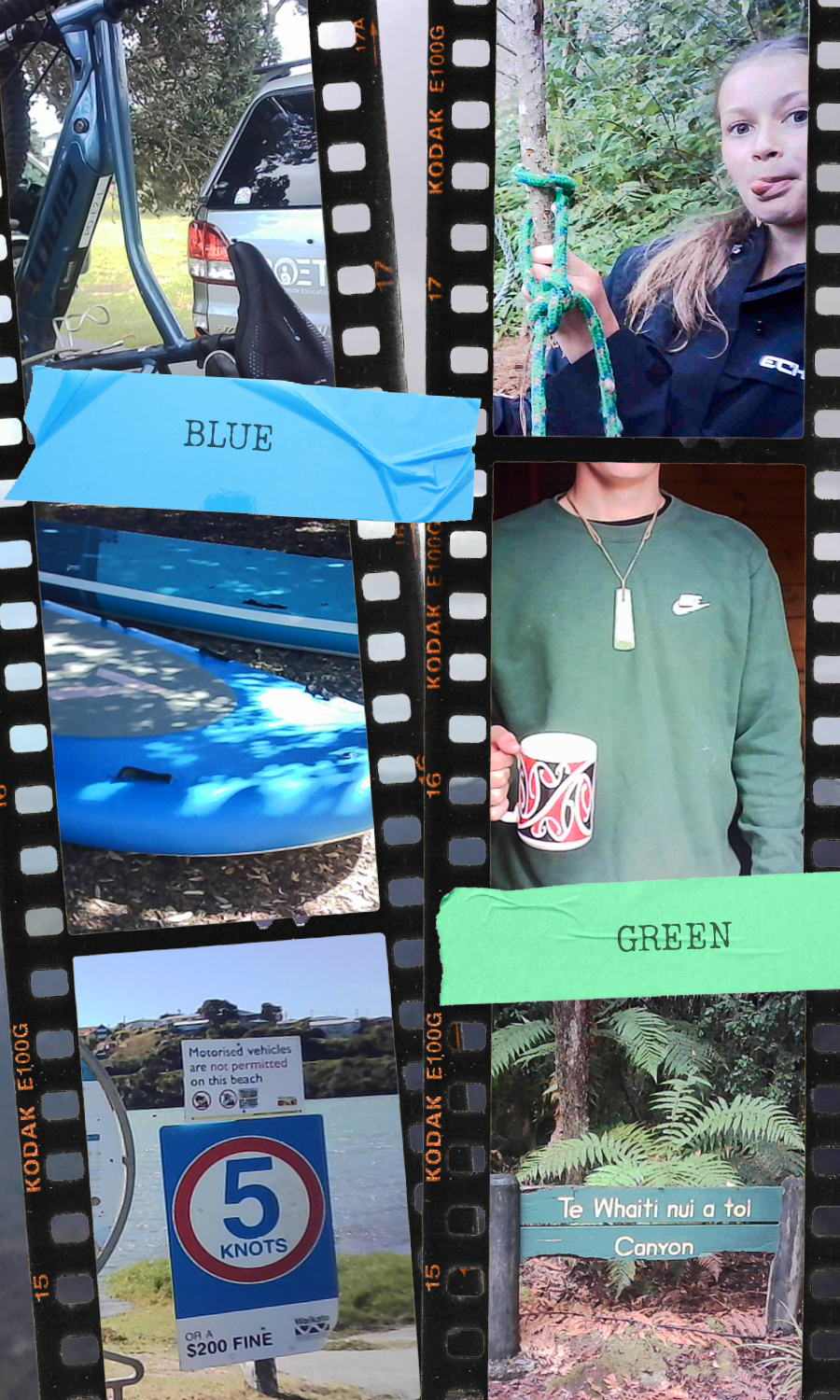
Students worked in groups and sometimes individually, photographing whatever caught their attention, from moss on rocks, muddy boots, sunset reflections, tent zips, native plants, campfires, paddles, and the small details both students and adults would normally walk straight past.
The best part was that the students had complete agency. There was no “right” photo and no expectation around what they should capture. Some students were constantly snapping away, others quietly observed before taking the occasional photo, but almost everyone got involved at some point and the activity quickly became a fun and natural part of camp.
What started as a simple low-cost activity became something much bigger. The cameras created conversation, laughter, creativity, and genuine whakawhanaungatanga. Students gathered around comparing images, sharing perspectives, and seeing familiar places through completely different eyes.
In many ways, the project perfectly reflects the theme of this annual report. In a world full of curated content, filters, prompts, and polished online images, these photos are something different, real moments captured by young people connecting with people, place, and the outdoors in their own authentic way.